

Investigation
Ukraine's 10,000 Drone Defense Record Exposes the West's Air Defense Flaws
KYIV – Ukraine's recent announcement of destroying over 10,000 Russian fixed-wing drones in February 2026 has sent a stark message to Western defense planners: the era of expensive missile defense against cheap, massed drone attacks is rapidly becoming unsustainable. While a testament to Ukraine's battlefield ingenuity, this unprecedented interception rate simultaneously exposes a "catastrophic math problem" for Western militaries still largely reliant on multi-million dollar interceptors to counter threats that cost mere thousands.
On March 27, 2026, Ukraine's Defense Ministry declared a new record, stating that its short-range air defense units had destroyed more than 10,000 Russian fixed-wing drones, including Shahed and Gerbera types, in February alone, primarily using interceptor drones The New Voice of Ukraine. This achievement, widely reported by Ukrainian and international news agencies Interfax-Ukraine, was hailed as a record for Ukraine's "small" air defense, demonstrating a crucial pivot in modern warfare.
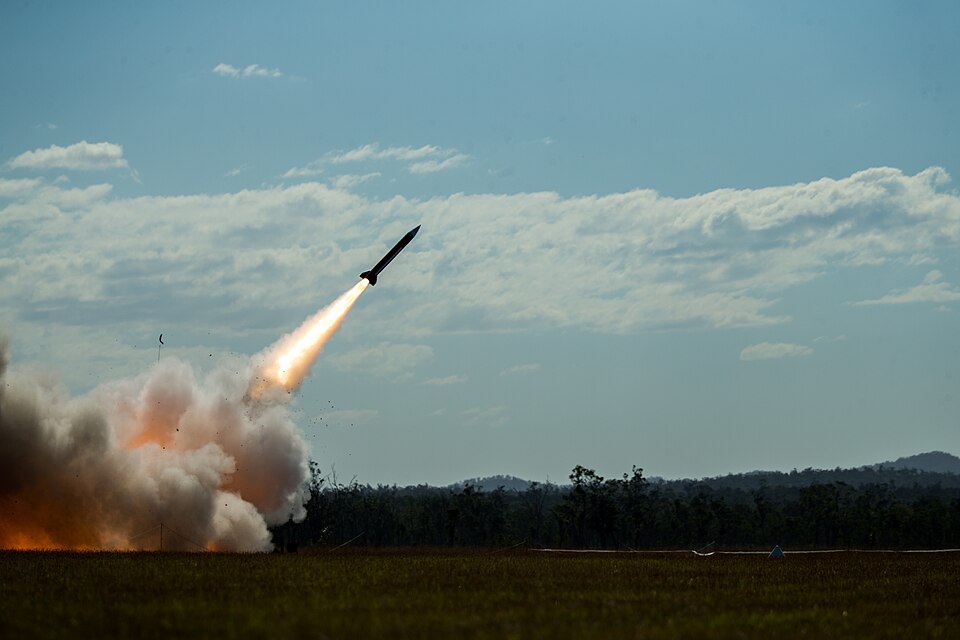
However, the sheer scale of this interception rate immediately raises profound questions about the viability of traditional Western air defense strategies. Defense analysts have quickly pointed out that if Ukraine had adopted a "Middle Eastern model" – employing advanced, multi-million dollar interceptors like the Patriot missile against these low-cost drone swarms – the economic and logistical implications would have been staggering. Intercepting 10,000 drones with Patriot missiles, assuming a 1:1 kill ratio, could cost an estimated $40 billion in a single month C4ISRNet. This calculation factors in the approximate cost of a Patriot PAC-3 missile at around $4 million and a PAC-2 missile at $3 million, pitted against Shahed-type drones that can cost as little as $20,000 to $50,000 each C4ISRNet. Such a scenario would represent a staggering 200x cost advantage for the attacker.
The economic strain is compounded by the limited global supply and slow production rates of these sophisticated systems. Current global stockpiles of Patriot interceptors, combining all usable PAC-2 and PAC-3 variants across U.S. and Allied inventories, are estimated to be around 10,000 in total Defense News. This means that a single month of saturation attacks at the scale Ukraine reportedly faced could effectively deplete every American magazine on the planet Defense News.
The production crisis further exacerbates this challenge. Lockheed Martin's production rate for PAC-3 MSE interceptors, for instance, was approximately 620 units per year in 2025 Lockheed Martin Press Release. At this rate, it would take more than 16 years of non-stop manufacturing just to replace the 10,000 interceptors hypothetically consumed in that one-month window. Even with ambitious plans to increase production to 2,000 units annually over the next seven years Defense News, the West would still face a five-year production backlog for every 30 days of high-intensity drone warfare. The U.S. and Gulf allies have already experienced this strain, reportedly burning through nearly 25% of their THAAD and SM-3 stockpiles defending against Iranian salvos in early 2026, with U.S. batteries firing 943 interceptors in just four days of a Gulf escalation, equivalent to 18 months of total production Defense News.
In contrast, Ukraine has adopted a dramatically different, and far more cost-effective, approach. By pivoting to low-cost interceptor drones, estimated to cost roughly $1,500 each, Ukraine was able to achieve its reported 10,000 kills for an estimated $15 million Unmanned airspace. This represents a staggering difference compared to the $40 billion that a Patriot-based defense would have incurred, earning the expensive missiles the moniker "Golden Bullets" C4ISRNet. Ukraine's innovative use of these drones is now seen by some as the only "battle-hardened, cost-effective anti-drone doctrine" that can preserve the world's limited Patriot supply for their intended purpose: stopping ballistic missiles C4ISRNet. Germany, for example, is already funding 15,000 STRILA interceptor drones for Ukraine's National Guard, signaling a recognition of this shift Dronexl.co.
However, the precise scope of Ukraine's February achievement warrants closer examination. While the Defense Ministry's figure of over 10,000 drone kills by interceptor drones is widely reported Ukrainian News Agency, other Ukrainian military reports for the same period present different numbers. For instance, Ukrinform reported over 30,000 aerial targets destroyed, including 3,238 Shahed-type UAVs, in February Ukrinform, while Oleksandr Syrskyi noted over 1,500 Russian drones destroyed by interceptor drones The Gaze. These discrepancies underscore the need for further clarification on the specific types of drones and interception methods included in the "10,000 kills" figure.
Regardless of the exact numbers, the core tension remains: the current cost-exchange ratio in air defense against massed drones is unsustainable for Western militaries. Ukraine's experience highlights that conventional air defense, while effective against high-value targets, is a strategic dead end against the relentless, low-cost drone swarms that define modern conflict. The challenge for Western nations now is to rapidly adapt, embrace innovative and affordable counter-drone technologies, and develop doctrines that can effectively preserve their limited supplies of advanced interceptors for the threats they were truly designed to counter. The future of air defense, as demonstrated by Ukraine, will not be won by "Golden Bullets" alone, but by a smart, layered, and economically viable approach to a rapidly evolving threat.