

Investigation
U.S. Mine-Hunting Ships Relocated from Persian Gulf just before Iran War Reducing Capability
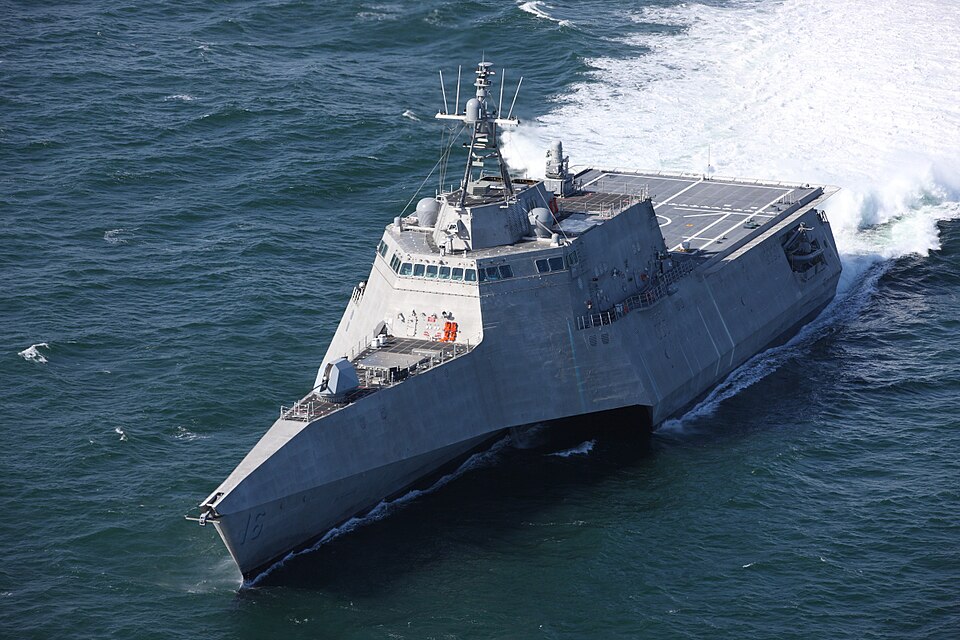
Two U.S. Navy dedicated mine countermeasures vessels (MCMVs), the USS Tulsa (LCS-16) and USS Santa Barbara (LCS-32), were confirmed to be in Malaysia in mid-March 2026, having departed the Persian Gulf. While this relocation undeniably reduces the U.S. dedicated surface mine-hunting presence in a waterway recognized for its strategic importance and persistent mine threat, claims that these were the "only" American mine-hunting ships or that they "just vanished" are overstated, as the U.S. Navy maintains other mine countermeasures capabilities in the region.
On March 15, 2026, the USS Tulsa and USS Santa Barbara, both Independence-class Littoral Combat Ships (LCS) equipped with mine countermeasures packages, were photographed at Penang's North Butterworth Container Terminal in Malaysia. A U.S. Navy spokesperson, Commander Joe Hontz, confirmed on March 16, 2026, that the vessels were conducting "brief logistical stops in Malaysia" for fuel, water, and provisions. Malaysian Defence Minister Mohamed Khaled Nordin also confirmed the ships' routine logistical replenishment and adherence to protocols. Observations from Penang indicated a bunker barge alongside and crew working on deck, suggesting maintenance or resupply activity consistent with a logistical stop.
These vessels were previously forward-deployed to Bahrain in the Middle East, where they were part of the U.S. Navy's dedicated surface mine-countermeasure presence. The USS Tulsa was in port in Bahrain as recently as February 9, 2026, and the USS Santa Barbara was operating in the Persian Gulf on January 30, 2026, according to reporting by The War Zone. Their departure occurred after these dates, amid escalating tensions and reported Iranian attacks in the Strait of Hormuz.
The Persian Gulf and its chokepoint, the Strait of Hormuz, are considered critical waterways due to their immense strategic importance for global energy supplies. Approximately 20% to 27% of the world's daily seaborne oil supply or consumption passes through the Strait of Hormuz. Iran's Islamic Revolutionary Guard Corps Navy has long considered mine warfare a core strategy and is estimated to possess roughly 6,000 mines. Sources refer to an "active maritime mining crisis" and the Strait of Hormuz as a "highly strategic" waterway where mine threats are a "huge threat". Historical incidents, such as the USS Samuel B. Roberts striking an Iranian mine in 1988, underscore the long-standing danger.
The operational history of the LCS mine countermeasures package in the region is relatively short. The U.S. Navy began installing these packages on its littoral combat ships in Bahrain in June 2025, as reported by Stratfor. The LCS vessels became the "entirety of the US Navy's dedicated MCM presence in the Fifth Fleet area of operations" after the Avenger-class minesweepers were decommissioned in September 2025. The LCS mine countermeasures package has faced criticisms, including issues with unreliable unmanned vehicles, with one incident where a tow bracket snapped during an exercise, and sensors proving ineffective in turbid or shallow waters, conditions found in the Persian Gulf. Trial operations have encountered "many issues with single points of failure". Unlike the wooden-hulled Avenger-class ships, which were built to "work inside or near mine-threat zones," the metal-hulled LCS vessels are designed to "stay outside mine-threat zones" and rely on unmanned systems. These known issues are part of the ongoing development and deployment of a new system.
However, the headline's assertion that these were the "only" American mine-hunting ships and that they "just vanished" is misleading. The U.S. Navy maintains a third Independence-class LCS configured for mine countermeasures, the USS Canberra (LCS-30), within the U.S. 5th Fleet area of responsibility, which includes the Persian Gulf. As of March 16, 2026, the USS Canberra was operating in the Indian Ocean, still within the 5th Fleet's operational area. Beyond surface vessels, the U.S. Navy's mine countermeasures capabilities in the region also include MH-60S Seahawk helicopters equipped with Airborne Laser Mine Detection Systems (ALMDS) and Airborne Mine Neutralization Systems (AMNS), which can deploy from LCS vessels. The USS Lewis B. Puller, an Expeditionary Sea Base, is also permanently deployed to the Fifth Fleet and can operate MCM assets. These assets mean that American mine-hunting coverage in the region is not "zero".
While the Persian Gulf faces a significant mine threat, the superlative "world's most mined waterway" is a strong claim that lacks definitive, publicly available comparative data across all global waterways. U.S. Defense Secretary Pete Hegseth also cautioned on March 15, 2026, that there was "no clear evidence" of mines in the strait at that specific time, despite reports of Iranian minelaying.
In conclusion, the core factual claim that two U.S. Navy dedicated mine countermeasures vessels, USS Tulsa and USS Santa Barbara, were located in Malaysia in mid-March 2026, having departed the Persian Gulf, is strongly supported by multiple credible news reports and confirmed by official U.S. Navy statements and the Malaysian government. This undeniably represents a reduction in dedicated surface mine-hunting coverage in the Persian Gulf. However, the headline's rhetorical language significantly overstates the situation. The ships did not "vanish" but were on confirmed "brief logistical stops". Furthermore, the claim of "only mine hunting ships" is inaccurate, as the U.S. Navy maintains other mine countermeasures assets in the region, including the USS Canberra, MH-60S Seahawk helicopters, and the USS Lewis B. Puller. While the Persian Gulf faces a significant mine threat, the superlative "world's most mined waterway" is a strong claim that lacks definitive, publicly available comparative data across all global waterways. The relocation highlights the ongoing challenges with the operational readiness and capabilities of the LCS mine countermeasures package, which has a relatively short operational history and known issues. The precise strategic reasons for the timing of the ships' relocation from Bahrain, particularly in the context of heightened regional tensions, remain officially unelaborated beyond "logistical stops".