

Investigation
Oil Shock Exposes 'Drill Baby Drill' Limits as Iran Crisis Fuels Price Surge
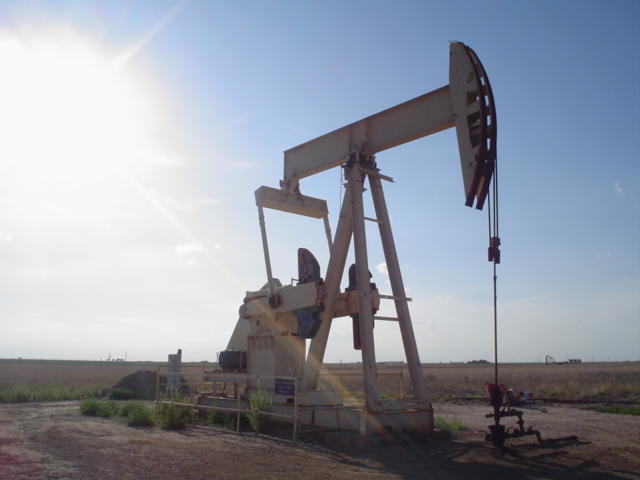
A severe oil shock has gripped global markets in March 2026, driven by an escalating U.S.-Israeli war on Iran that has sent crude prices soaring and disrupted critical energy infrastructure. This crisis is intensifying scrutiny on the long-held "Drill Baby Drill" narrative, which suggests increased domestic oil production can insulate the United States from international energy shocks, as experts increasingly emphasize the global nature of oil markets. The events underscore that while domestic drilling offers some mitigation, it does not provide absolute price protection, and true energy security may lie in reducing overall oil dependence through renewable sources.
The current U.S.-Israeli conflict with Iran has triggered a dramatic surge in global oil prices. Brent crude, the international benchmark, rose to $116.38 per barrel, up from under $73 per barrel on the eve of the war, and at one point reached $119 a barrel CBS News. U.S. crude futures also climbed above $97 per barrel The Guardian. The conflict escalated sharply after an Israeli strike on Iran's South Pars gas field on February 28, 2026 CBS News. Iranian counter-attacks have targeted key energy infrastructure, including Qatar's Ras Laffan gas plant—the world's largest LNG facility—and two oil refineries in Kuwait, causing significant damage and wiping out 17% of Qatar's LNG capacity for up to five years The Guardian.
Further exacerbating the crisis, U.S. President Donald Trump announced on March 14, 2026, that the U.S. had bombed military targets on Iran's Kharg Island, a crucial hub historically handling 85-95% of the country's crude exports The Washington Post TIME. Iran has responded with threats to block the Strait of Hormuz, a critical global oil and LNG transit chokepoint, and reports indicate that ship traffic through the Strait has slowed to a trickle, with several merchant ships struck in and around the waterway The Guardian Fox News Iran International. Experts now consider the threat to Middle East oilfields as the primary driver for the upward march of market prices The Guardian. The International Energy Agency (IEA) has described the disruption as the "largest supply disruption in the history of the global oil market" IEA. While the Iran crisis is the primary trigger, OPEC+ production policies, which include significant supply cuts extended through the end of 2026, also contribute to tightening global oil supply chains Markets.com.
The "Drill Baby Drill" slogan, coined in 2008, has been a rallying cry for increased domestic oil and gas production, often championed by Republican politicians, including Donald Trump Wikipedia The Honest Broker. Proponents have historically advocated for energy independence to reduce reliance on foreign energy sources, enhance national security, and create domestic jobs, not solely as a guarantee against price fluctuations American Petroleum Institute Heritage Foundation. However, the concept of "energy independence" as a shield against global price shocks has long been debated, with experts calling it a "political slogan, not an economic or technical concept with a clear definition" Foreign Policy UC Berkeley Haas School of Business.
Historically, countries with a higher share of "homegrown" renewables have demonstrated less vulnerability to energy shocks. According to Rana Adib, executive secretary of the Renewable Energy Policy Network for the 21st Century (REN21), such nations are "less vulnerable to these shocks" Deutsche Welle (DW). For instance, Uruguay, with over 90% of its electricity from renewables, experienced stable energy prices during the energy crisis linked to the war in Ukraine, unlike countries heavily dependent on fossil fuel imports Deutsche Welle (DW). Denmark similarly reduced its reliance on fossil fuels after the 1970s oil crisis by investing in green energy Deutsche Welle (DW). Renewables offer more stable and predictable pricing as they are not subject to market fluctuations driven by conflict or supply disruptions, allowing governments to shield their economies Deutsche Welle (DW) Pragmatic Environmentalist of New York EnergyPortal.eu. European nations with substantial renewable and nuclear energy use, such as Spain, France, Sweden, and Denmark, are less exposed to oil price shocks due to renewables' low marginal operating costs and independence from imported fuel Deutsche Welle (DW) MDPI.
The current oil shock strongly supports the argument that the "Drill Baby Drill" narrative, as a promise of absolute price protection, is largely a myth. Despite the U.S. being the world's largest oil producer and a net oil exporter, U.S. gasoline prices are soaring Foreign Policy University of Colorado Boulder. This phenomenon is attributed to the global nature of the oil market, where oil is priced internationally Foreign Policy Resources for the Future. Experts explain that even domestically produced U.S. energy rises in cost when geopolitical tensions threaten global supply routes like the Strait of Hormuz, rendering increased domestic drilling largely ineffective in influencing world oil prices or what Americans pay at the gas pump Foreign Policy UNFTR Columbia University Forbes. The Iran crisis, therefore, underscores that "energy independence does not equate to price protection" Foreign Policy.
The current U.S. energy strategy under President Trump appears to run counter to reducing overall oil dependence. The administration's policies emphasize fossil fuels, aiming for "American energy dominance" through oil and gas Devdiscourse The White House. This has involved dismantling regulations, reopening federal lands and offshore areas for development, and accelerating approval timelines to expand oil, natural gas, coal, and nuclear capacity Devdiscourse Center for American Progress. Specific actions include the announcement of a $17 billion natural gas-fueled facility in Pennsylvania Pittsburgh Post-Gazette and moves to cancel clean energy projects and phase out tax incentives for renewables under "The One Big Beautiful Bill Act" (OBBBA) Devdiscourse Center for American Progress. Critics argue this strategy leaves Americans more vulnerable to supply shocks and highlights the need for a transition to renewable energy for true security Devdiscourse Center for American Progress.
While the "Drill Baby Drill" narrative's ability to fully insulate the U.S. from global price shocks is challenged, its broader goals extend beyond mere price protection. Proponents also emphasize reducing reliance on foreign energy sources, enhancing national security, and creating domestic jobs American Petroleum Institute Heritage Foundation. From this perspective, increased domestic production does offer some degree of mitigation. The U.S. has become a net exporter of petroleum products, a structural shift that began in 2020 and has continued, making the U.S. economy "less affected by volatile oil prices than during the 1970s and '80s," according to LPL Research RTI Wealth Management.
Indeed, despite rising U.S. gasoline prices (an average increase of 23.6% for Americans), the economic fallout from the Iran war is hitting many other countries harder Economic fallout from U.S.-led war is hitting the rest of the world harder. Nations like Nigeria, Laos, and Australia have experienced significantly larger price spikes (39.5%, 32.9%, and 31.8% respectively), and some Asian countries face gas shortages not seen in the U.S. Economic fallout from U.S.-led war is hitting the rest of the world harder. This suggests that while not immune, the U.S.'s domestic production and lower "oil intensity" (less oil used per dollar of economic output) provide a relative advantage in mitigating the severity of the shock compared to more import-dependent nations Economic fallout from U.S.-led war is hitting the rest of the world harder RTI Wealth Management.
The claim that the current U.S. energy strategy is the "complete opposite" of reducing oil dependence also warrants nuance. While the Trump administration prioritizes fossil fuels and "energy dominance," it also acknowledges an "all-of-the-above" energy approach, including support for nuclear power, hydropower, and some renewable energy development White House Archives Council on Foreign Relations. Furthermore, the U.S. has seen continued growth in renewable energy capacity and generation during periods aligned with the Trump administration, driven by market forces, state-level policies, and federal incentives that predate or continued during the administration NREL U.S. Energy Information Administration (EIA) Los Angeles Times. This suggests a more complex energy landscape than a simple "complete opposite" characterization.
However, the transition to renewables is not entirely without its own global dependencies. The manufacturing and deployment of renewable energy technologies rely on global supply chains for critical minerals and components Deloitte IEA. Disruptions in these supply chains or fluctuations in raw material prices could indirectly affect the cost and speed of renewable energy deployment, introducing another layer of global market dependency, though not directly tied to oil prices Deloitte IEA.
The evidence strongly supports the core assertion that an oil shock driven by the Iran crisis is currently sending global prices soaring, with immediate and specific details of the conflict's impact on supply and prices well-documented by numerous recent sources. The global nature of the oil market is also clearly established, limiting the effectiveness of domestic drilling for absolute price protection. Therefore, the "Drill Baby Drill" narrative, as a promise of absolute price insulation, is indeed challenged by current events. However, the narrative's broader goals of energy security and job creation, alongside the U.S.'s relative advantage in mitigating the current crisis compared to more import-dependent nations, introduce important nuances.
Regarding the U.S. energy strategy, while the Trump administration's stated priorities and policy actions clearly favor fossil fuels, the characterization of it as the "complete opposite" of reducing oil dependence is an overstatement. The complex energy landscape includes continued, market-driven growth in renewables and an "all-of-the-above" approach that acknowledges diverse energy sources. Finally, the evidence is robust that countries investing in renewables are significantly less vulnerable to oil price shocks. While renewables have their own supply chain dependencies for critical minerals, there is no current evidence from March 2026 to suggest these dependencies are causing comparable economic exposure or price shocks to the ongoing oil crisis.
The current oil shock vividly illustrates the limitations of relying solely on domestic fossil fuel production for energy security in a globally interconnected market. While the U.S. benefits from its domestic output, the crisis underscores the inherent volatility of oil and the strategic advantage of transitioning to renewable energy sources for more stable and predictable energy prices. The full extent to which the "Drill Baby Drill" narrative's broader goals are being met or undermined by the current crisis, and the precise balance between federal fossil fuel promotion and other drivers of renewable growth in the U.S., remain areas for continued observation and analysis.