

Investigation
Trump Threatens NATO's Future Amidst Middle East Crisis and Allied Resistance
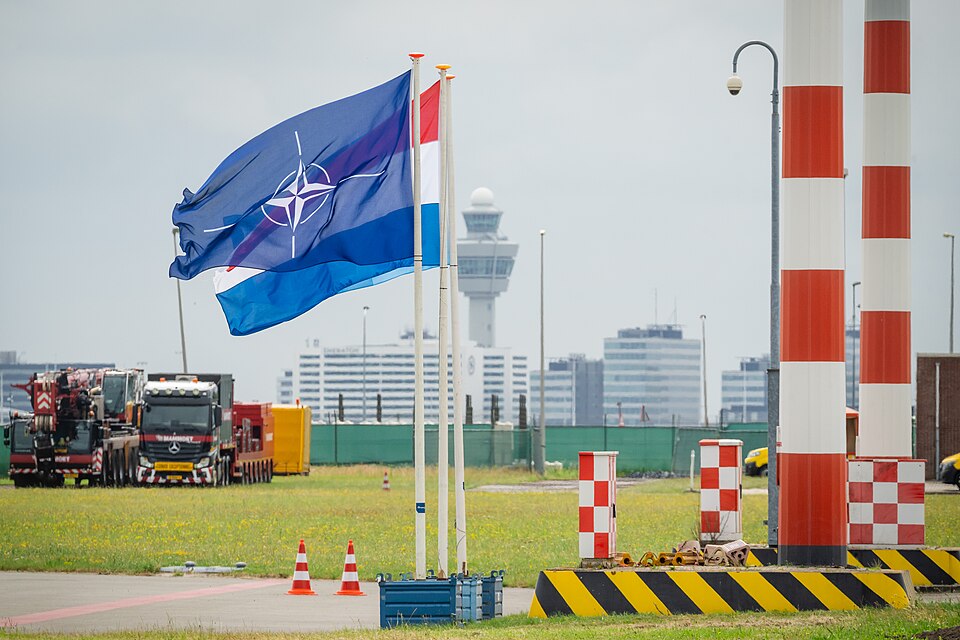
President Donald Trump has explicitly warned that the North Atlantic Treaty Organization (NATO) faces a "very bad future" if member states do not assist the United States in securing the Strait of Hormuz, a critical global oil transit choke point Global News, TIME. This stark warning, delivered over the weekend of March 15-16, 2026, to the Financial Times, underscores a growing rift between the U.S. and its allies over military engagement in the Middle East Global News, Xinhua.
As of March 2026, the U.S. administration is actively demanding international naval escorts to protect oil transit through the Strait of Hormuz CBS News, a waterway that has been experiencing significant geopolitical and economic disruption. On February 28, 2026, the United States and Israel launched a series of strikes against Iran, targeting multiple sites and cities House of Commons Library, Xinhua. In response, Iran launched retaliatory missile and drone attacks against Israel, U.S. military bases in the region, and other allied states, while also threatening to shut the Strait of Hormuz House of Commons Library, Modern Diplomacy. This has led to a sharp decline in maritime transit and a surge in global oil and gas prices CBS News, Modern Diplomacy. White House press secretary Karoline Leavitt reiterated on March 16, 2026, that the administration is forming a naval coalition to escort tankers through the Strait of Hormuz CBS News, KSAT.
President Trump's current call for allied support marks a notable shift from his previous "energy dominance" rhetoric, which emphasized U.S. energy independence and less reliance on foreign sources The White House, TIME (2017). During his first term and leading up to his second, Trump consistently promoted the U.S. as a net exporter of energy The White House. On March 16, 2026, he stated that the U.S. doesn't "need" the Strait of Hormuz because "We have a lot of oil. We're the number one producer anywhere in the world, times two" The Guardian. Yet, concurrently, he demanded that other countries, who depend more heavily on the Strait for their energy, help secure it The Hindu. This tension between asserting self-sufficiency and demanding allied military assistance for a vital global waterway indicates a potential reversal in the practical application of "energy dominance" regarding allied involvement in securing global oil transit PBS (2024).
Evidence strongly supports the headline's core assertion that President Trump has warned about NATO's future in relation to Middle East support. He explicitly told the Financial Times, "If there's no response or if it's a negative response I think it will be very bad for the future of NATO" Global News, TIME, MaltaToday. This direct quote, reported by multiple credible news organizations on March 16, 2026, leaves little room for ambiguity regarding his stance The Hindu, WFMD. Trump also stated on Truth Social over the weekend of March 15-16, 2026, that "The United States of America has beaten and completely decimated Iran, both Militarily, Economically, and in every other way" Military.com.
Furthermore, there is strong evidence that key allies have expressed significant reluctance to engage in military action as demanded by the U.S. On March 16, 2026, Germany, Spain, and Italy explicitly ruled out participating in any mission in the Gulf The Guardian. German Chancellor Friedrich Merz stated, "This is not our war, we have not started it" The Guardian, The New Arab. Japanese Prime Minister Sanae Takaichi confirmed that Japan has no plans to dispatch naval vessels to escort ships, citing Japan's "war-renouncing constitution" and "legally difficult" naval deployment in the Middle East The Hindu, News On AIR. Canadian Prime Minister Mark Carney stated that Canada was not participating in "offensive operations" of the U.S. and Israel The Drive.
UK Prime Minister Keir Starmer has also emphasized a focus on "British interests" rather than unconditionally following U.S. policy. On March 16, 2026, Starmer stated that the UK would not be "drawn into the wider war" but was working on "a viable plan" to reopen the Strait of Hormuz GOV.UK (March 16), Xinhua. He reiterated that his leadership is about "standing firm for British interests regardless of outside pressure" GOV.UK (March 16), UNITED24. Earlier, Starmer had reportedly refused a U.S. request to use British military bases for strikes on Iran, creating a rift with Trump POLITIS, LSE Blogs.
However, the U.S. administration's narrative contains a notable inconsistency. President Trump claimed over the weekend of March 15-16, 2026, that the U.S. had "beaten and completely decimated Iran, both Militarily, Economically, and in every other way" Military.com. He further stated on Truth Social that "The United States of America has beaten and completely decimated Iran" Military.com. While UK Prime Minister Keir Starmer acknowledged that U.S.-led operations had "massively weakened" Iran's military capabilities UNITED24, the simultaneous demand for international naval escorts to secure the Strait of Hormuz suggests that the threat posed by Iran's military or its ability to disrupt shipping is still significant enough to warrant international intervention The War Zone. This creates a potential contradiction: if Iran's military is "decimated," the urgent need for allied naval escorts appears less critical, unless the "decimation" is an overstatement or the threat to shipping persists despite other military setbacks. This inconsistency is further highlighted by Treasury Secretary Scott Bessent's admission on March 16, 2026, that the U.S. is "fine" with Iranian oil tankers passing through the Strait, attributing it to surging oil prices The New Republic.
Overall, the evidence strongly supports the claim that President Trump has issued a significant warning about NATO's future due to a perceived lack of allied support in the Middle East, specifically concerning the Strait of Hormuz. The statements from Trump himself and the clear rejections from multiple key allies, all from March 2026, are highly current and directly verify the core elements of the headline. The nuance lies in the motivations behind allied reluctance, which extend beyond a simple "lack of support" to include national interests, constitutional limitations, and a desire to avoid wider conflict. Furthermore, the U.S. administration's simultaneous claims of Iran's military "decimation" alongside demands for naval escorts present an internal inconsistency that remains largely unaddressed by official U.S. statements.
What remains unclear is how the U.S. administration reconciles its claims of "decimated" Iranian military capabilities with its urgent demand for international naval escorts. The specific long-term implications of Trump's warning for NATO's cohesion and future operations are also uncertain. While allies have stated their reluctance, the full range of diplomatic and strategic alternatives they might pursue to address Strait of Hormuz security without direct military intervention is yet to be fully detailed. Independent assessments of Iran's current military capabilities would also help to contextualize the U.S. administration's claims, providing a more objective measure against the administration's strong rhetoric.