

Reporting
Michigan Senate Race Roiled as Arab American Leaders Shift Support to Abdul El-Sayed
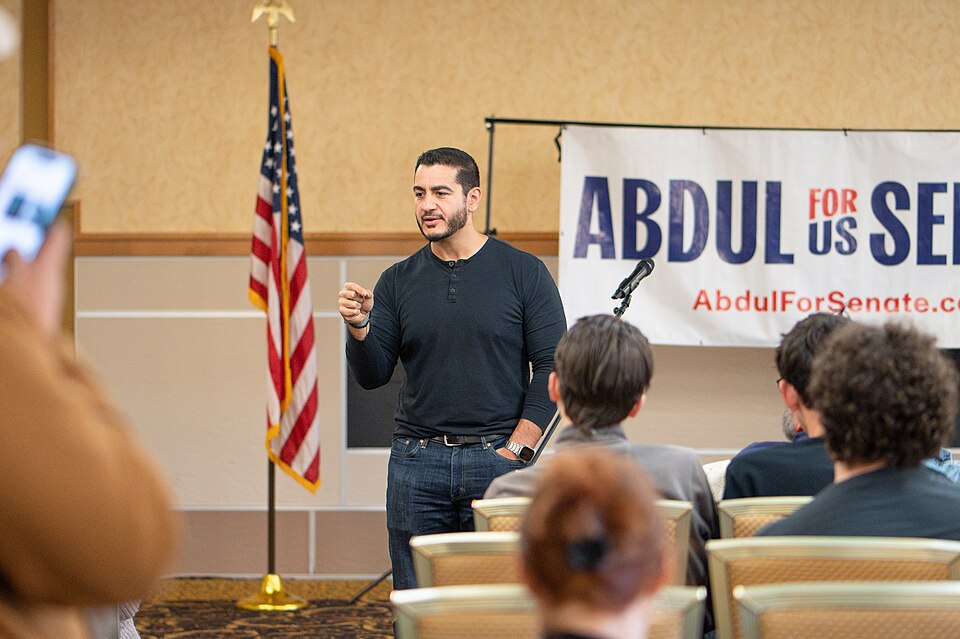
DETROIT — A coalition of prominent Arab American leaders and former Republican organizers in Michigan have publicly withdrawn their support from Republican Senate nominee Mike Rogers to endorse Democrat Abdul El-Sayed, reshaping the dynamics of a pivotal swing-state race.
The shift, documented in a Politico report on August 30, 2026, features high-profile defections from figures who previously backed Donald Trump. Hassan Nehme, who served as the Michigan Republican Party’s vice chair and led Arab American outreach during the 2024 cycle, stated that the GOP has "lost all traction" and is "dead in the water" in the region.
Similarly, Dearborn-based Imam Husham Al-Husainy has formally shifted his endorsement to El-Sayed, citing unfulfilled foreign policy promises. Faye Nemer, leader of the Middle Eastern and North African American Chamber of Commerce, also pointed to a growing change in sentiment away from the Republican platform.
These leadership defections follow El-Sayed’s commanding performance in the August 4 Democratic primary. Precinct-level data published by The Guardian shows the progressive candidate won 78 percent of the vote in Dearborn and 82 percent in Hamtramck, demonstrating deep grassroots support in Arab American-majority municipalities.
Despite these localized gains, statewide polling indicates the general election remains highly competitive. A late-August survey by EPIC-MRA placed El-Sayed ahead of Rogers by a narrow 47 percent to 43 percent margin, which falls within the poll's margin of error. Conversely, a mid-August Fox News poll showed Rogers leading El-Sayed 51 percent to 47 percent, while an AARP poll showed El-Sayed holding a single-point lead overall but trailing by nine points among voters over 50.
The current friction stems from unfulfilled expectations regarding Middle East foreign policy, particularly the slow peace process in Gaza and escalating tensions involving Iran. While Donald Trump made historic inroads in Arab-majority cities during the 2024 presidential election, political analysts noted that much of that shift functioned as a protest vote against the Biden administration rather than a permanent alignment with the Republican Party.
In response to El-Sayed's momentum, Rogers and his allies have launched aggressive campaigns characterizing the Democratic nominee as an extremist. Rogers has criticized El-Sayed's past campaign appearances with controversial left-wing figures and scrutinized his initial response to a Michigan synagogue attack, which national reports detailed last week. El-Sayed recently acknowledged he made a mistake and apologized to Jewish Democrats for his comments following the attack.
At the same time, local reporting indicates that El-Sayed faces ongoing skepticism from some Jewish voters who remain wary of his past criticisms of Israel. This complex dynamic keeps the race volatile, as both campaigns actively compete for overlapping, influential voting blocs in a state where small shifts can decide the outcome.
Both candidates are scheduled to step up campaign events across metro Detroit in the coming weeks to solidify their support among these critical constituencies.