

Reporting
US Bond Market Challenges - What's the Deal?

WASHINGTON — The United States Department of the Treasury released official transaction data on August 17, 2026, confirming that the three largest foreign holders of U.S. government debt—Japan, the United Kingdom, and China—all reduced their Treasury portfolios in June 2026, driving total foreign holdings down to $9.299 trillion U.S. Department of the Treasury. The synchronized pull-back occurred as the U.S. gross national debt officially breached the $40 trillion threshold and long-term borrowing costs climbed to multi-decade highs, intensifying the pressure on domestic bond markets Treasury Data Analysis.
According to the official monthly Treasury International Capital (TIC) data release, Japan, the single largest foreign holder of U.S. debt, trimmed its position by $26.4 billion to $1.1167 trillion Gate.com. Concurrently, the United Kingdom reduced its holdings from $948.6 billion to $939.9 billion, while China cut its portfolio by $25.9 billion to $633.4 billion U.S. Department of the Treasury. For China, the June reduction marks its lowest level of direct U.S. debt ownership since September 2008, representing a 13.4 percent year-over-year decline and intensifying debate over who will absorb Washington's escalating borrowing requirements Seoul Economic Daily.
This broad-based foreign divestment coincided with an extraordinary joint currency intervention by the U.S. and Japan to support the plummeting yen, alongside aggressive policy maneuvers by U.S. Treasury Secretary Scott Bessent to stabilize long-term domestic yields The Japan Times. While the headline figures suggest a coordinated retreat from U.S. assets, market analysts and institutional data indicate that the shift reflects a complex mix of active currency defense, passive valuation adjustments, and structural reallocations through offshore financial hubs Sage Advisory.
---
Fiscal Pressures and the $40 Trillion Debt Threshold
The $72.1 billion drop in total foreign-held U.S. debt in June—falling from $9.371 trillion in May to $9.299 trillion—has reignited concerns regarding global appetite for U.S. sovereign debt Seoul Economic Daily. The decline is particularly acute for China, which has steadily reduced its direct Treasury holdings for more than a year WION. According to financial broadcasts analyzing the bond market, this persistent selling raises structural questions about how the U.S. will fund its widening fiscal deficits as traditional state buyers reduce their direct participation YouTube.
However, the U.S. Treasury Department explicitly notes in its reporting guidelines that monthly TIC transaction data is custodial, meaning it tracks where the securities are held rather than the ultimate country of ownership U.S. Department of the Treasury. Financial analysts point out that while China's direct holdings have fallen, global capital is routinely routed through major European custodial centers such as Belgium, Luxembourg, and the Cayman Islands, where Treasury holdings have remained stable or increased Voronoi App. Furthermore, a significant portion of the reported monthly declines can be attributed to passive valuation effects, as fluctuating bond prices and coupon maturities alter the total value of portfolios without active selling by foreign central banks Sage Advisory.
The pressure on the Treasury market is further compounded by the sheer scale of U.S. government borrowing. On August 18, 2026, the gross national debt of the United States officially crossed the $40 trillion milestone, occurring just five months after it reached $39 trillion in March Treasury Data Analysis. To fund ongoing budget deficits, the Treasury Department confirmed plans to borrow approximately $1.37 trillion in net marketable debt over the second half of 2026 YouTube. This massive supply of new debt has pushed long-term borrowing costs to multi-decade highs, with the 30-year U.S. Treasury yield touching 5.33 percent in mid-August YouTube.
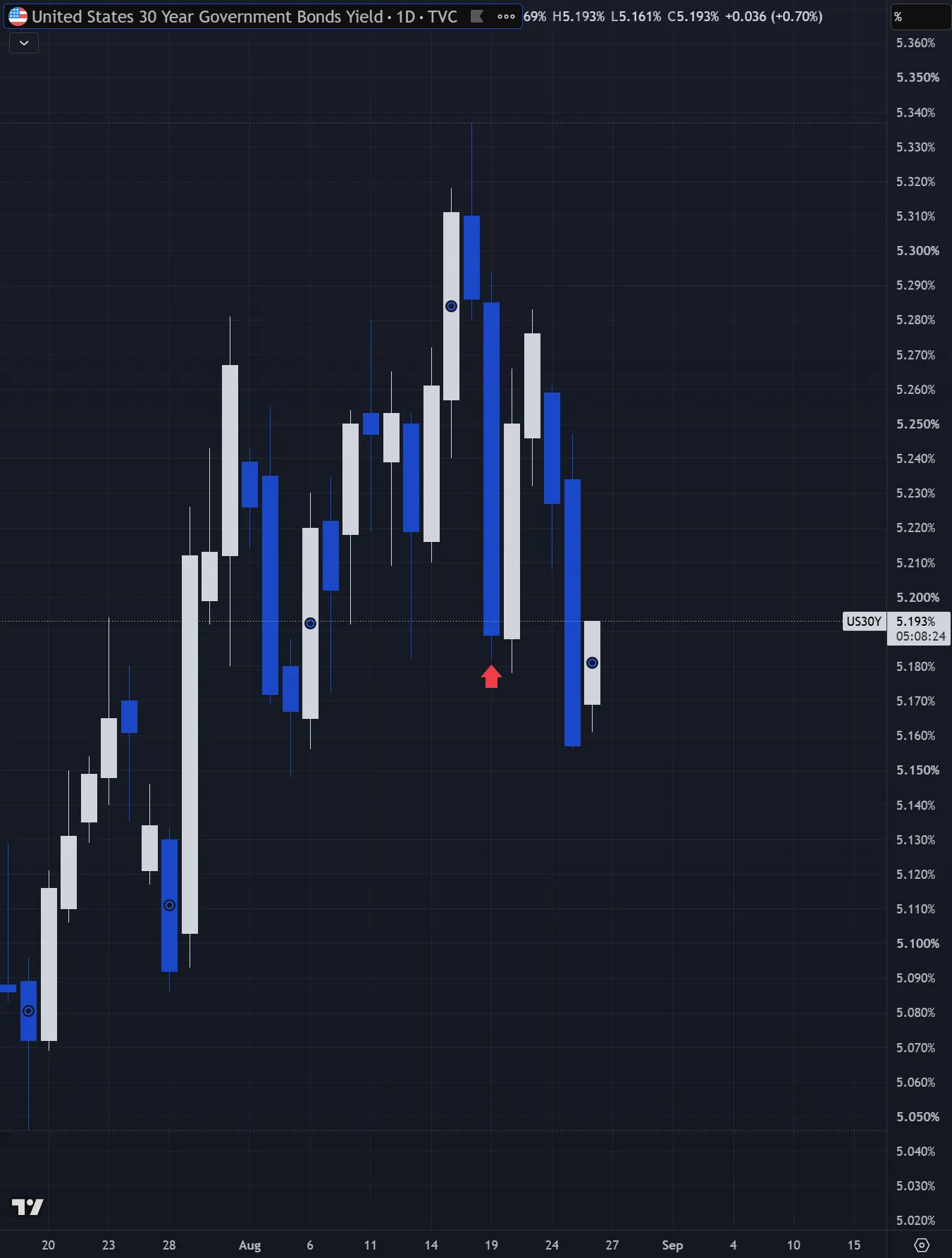
Annual net interest costs on the federal debt have now surpassed the $1 trillion mark, creating a compounding budgetary strain as older, low-yield debt is refinanced at significantly higher current rates YouTube. Economists at the Peter G. Peterson Foundation note that while the $40 trillion gross debt figure is a significant political milestone, approximately $8 trillion of that total consists of intragovernmental debt, which represents internal government bookkeeping Peter G. Peterson Foundation. They argue that "debt held by the public," which stands at approximately $32 trillion, is the more macroeconomically meaningful metric for assessing outstanding market supply Peter G. Peterson Foundation.
The rapid expansion of the federal debt has also triggered concerns regarding the long-term sustainability of the Treasury market if foreign central banks continue to diversify their foreign exchange reserves away from U.S. dollar-denominated assets WION. Despite these concerns, institutional demand from domestic private investors, pension funds, and insurance companies has partially offset the reduction in foreign official holdings, though this shift has required higher yields to attract sufficient private capital YouTube. The rising yield environment has broad economic consequences, directly influencing consumer credit, corporate bond issuance, and the broader cost of capital across the United States The Japan Times.
---
Coordinated Yen Intervention and the Camp David Memo
The contraction in foreign holdings occurred against the backdrop of a historic, coordinated effort to stabilize the Japanese yen. On July 31, 2026, the U.S. Treasury took the highly unusual step of joining the Japanese Ministry of Finance in a coordinated currency intervention to prop up the yen after it hit a 40-year low near 164 to the dollar Atlas Institute. This action represented the first joint U.S.-Japan currency intervention since the aftermath of the Fukushima earthquake in 2011, and the first time the U.S. actively purchased yen since the Asian Financial Crisis in June 1998 Atlas Institute.
To execute the intervention without weakening the U.S. dollar, the Federal Reserve Bank of New York—acting on behalf of the Treasury’s Exchange Stabilization Fund (ESF)—sold euros to purchase yen Peterson Institute for International Economics. This operational departure drew immediate scrutiny from the European Central Bank and members of Congress, who questioned the unilateral use of European currency reserves to manage an Asian exchange rate Senate Banking Committee. The decision to bypass traditional dollar-yen mechanisms was seen as an attempt to avoid complicating domestic monetary policy while still providing critical support to a key geopolitical ally Peterson Institute for International Economics.
Between late July and late August 2026, Japan spent an estimated 15.4 trillion yen, equivalent to approximately $97 billion, to defend its currency from further collapse Ministry of Finance Japan. While the U.S. Treasury has not officially disclosed the exact size of its financial contribution to the joint operation, a photographed note from a Camp David cabinet meeting on July 31, written in Secretary Bessent’s own handwriting, read: "To Do: Buy Japanese Yen $5-10 bil." Senate Banking Committee. This leak fueled intense political debate regarding the transparency of the Treasury's market operations and the extent of executive discretion in currency management Senate Banking Committee.
Treasury Secretary Scott Bessent defended the intervention, linking yen instability directly to American borrowing costs The Japan Times. Bessent warned that a "disorderly yen" decline poses a direct threat to U.S. interest rates The Japan Times. If Japanese authorities are forced to liquidate their $1.1 trillion U.S. Treasury portfolio to raise dollars for unilateral currency defense, the sudden flood of supply would drive U.S. bond yields higher, raising mortgage and corporate borrowing costs across the American economy The Japan Times. In public remarks on August 30, Bessent sought to reassure markets, stating that the yen's movements were "pretty contained" and did not represent a disorderly market threat KELO-AM.
Analysts at Goldman Sachs and other major financial institutions noted that while the U.S. contribution was largely symbolic compared to Japan's multi-billion-dollar push, the joint action sent a powerful signal to currency speculators that Washington would not tolerate a runaway depreciation of the yen Atlas Institute. The intervention succeeded in temporarily halting the yen's slide, but it also highlighted the delicate balance the Treasury must maintain between domestic fiscal objectives and international monetary commitments Peterson Institute for International Economics.
---
The Carry Trade Unwind and the Bank of Japan's Rate Hike
The urgency of the joint intervention was underscored by the rapid unwinding of the global "yen carry trade." For years, global investors utilized near-zero Japanese interest rates to borrow cheap yen and invest in higher-yielding U.S. assets, including equities and Treasuries Business Insider. However, this highly leveraged trade was thrown into turmoil when the Bank of Japan raised its benchmark interest rate to 1.0 percent in June 2026, ending decades of near-zero and negative interest rate policies The Guardian.
The Bank of Japan's rate hike, aimed at combating rising domestic inflation, significantly increased the Japanese government's debt-servicing costs, which already consume over 25 percent of its national budget The Guardian. Economists at Morgan Stanley and StoneX warned that a rapid, disorderly appreciation of the yen triggers a forced unwinding of these carry trade positions, forcing global investors to rapidly dump U.S. assets to cover their yen-denominated debts, sparking widespread market instability Business Insider. This mechanism connects Japanese domestic monetary decisions directly to the liquidity and pricing of U.S. financial markets The Japan Times.
The transition away from negative interest rates in Japan represents a fundamental structural shift in global capital flows The Guardian. For nearly three decades, Japan acted as a primary provider of cheap liquidity to global markets Ministry of Finance Japan. As domestic yields in Japan become more attractive, Japanese institutional investors—such as life insurance companies and pension funds—are increasingly incentivized to repatriate capital, reducing their reinvestment rates in U.S. debt securities and compounding the supply-demand imbalance in the Treasury market Sage Advisory.
Furthermore, the Bank of Japan's policy tightening has occurred at a time when the country's fiscal position is highly vulnerable The Guardian. With a public debt-to-GDP ratio exceeding 260 percent, even minor increases in the benchmark interest rate translate into substantial additions to the national deficit The Guardian. This fiscal constraint limits the Bank of Japan's flexibility in raising rates further, creating a complex policy dilemma as the central bank attempts to control inflation without triggering a domestic debt crisis or destabilizing international exchange rates The Guardian.
---
Institutional Backstops: FIMA Repo and Treasury Buybacks
To prevent Japan from becoming a forced seller of U.S. Treasuries during these periods of stress, the Federal Reserve's Foreign and International Monetary Authorities (FIMA) Repo Facility has been actively deployed as a structural backstop CMC Markets. Established during the COVID-19 pandemic, the FIMA facility allows foreign central banks to temporarily pledge their U.S. Treasuries as collateral to borrow U.S. dollars directly from the Fed Ben Emons Substack. By utilizing the FIMA repo facility, Japan's Ministry of Finance and the Bank of Japan can secure the dollar liquidity needed for yen-buying interventions without having to sell their Treasury bonds on the open market, thereby avoiding upward pressure on U.S. yields Ben Emons Substack.
Secretary Bessent has publicly urged the Federal Reserve to upsize the facility's current counterparty limits to strengthen this backstop, though the exact amount of dollars currently drawn through the facility remains officially undisclosed CMC Markets. Some monetary economists argue that the FIMA repo facility acts as a critical safety valve for the global financial system, effectively decoupling foreign exchange interventions from direct bond market liquidations Ben Emons Substack. However, critics suggest that over-reliance on the facility could obscure the true level of market stress and expand the Federal Reserve's balance sheet liabilities to support foreign monetary authorities Money and Banking.
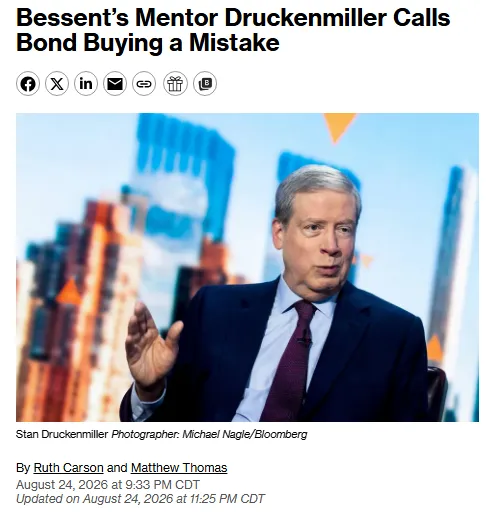
In tandem with international currency coordination, the U.S. Treasury Department has taken direct action to support domestic bond market liquidity. On August 19, 2026, the Treasury announced it would at least double the size of its liquidity support buyback operations for long-dated (10-to-30-year) nominal coupon securities U.S. Department of the Treasury. Starting September 9, 2026, the minimum purchase size for these operations was raised from $2 billion to at least $4 billion per operation U.S. Department of the Treasury. Secretary Bessent subsequently confirmed that the $4 billion figure is a floor, and individual operations could exceed this amount depending on prevailing market conditions, with the explicit goal of injecting liquidity and calming elevated long-term yields Investing Live.
The announcement was met with mixed reactions from market participants. While some analysts characterized the move as a significant step to support the long end of the yield curve, others noted that the overall quarterly liquidity-support buyback allocation remained completely unchanged at $38 billion U.S. Department of the Treasury. Financial experts, including Chris Whalen, pointed out that Bessent did not introduce new funding to the program; rather, the Treasury reallocated and concentrated existing funds to the long end of the curve 24/7 Wall St.. Whalen characterized the operational adjustment as largely "symbolic" and "academic" when measured against the scale of the $32 trillion marketable Treasury market, suggesting its primary value lies in signaling the Treasury's readiness to act as a buyer of last resort 24/7 Wall St..
---
Global Market Implications and the Road Ahead
The convergence of foreign debt reductions, currency interventions, and domestic liquidity operations highlights the growing interdependence of U.S. fiscal policy and global monetary stability. As the U.S. national debt continues its upward trajectory past $40 trillion, the Treasury's reliance on foreign capital remains a critical vulnerability Peter G. Peterson Foundation. The Bank of Japan's ongoing monetary tightening, with economists widely expecting further rate hikes toward 1.25 percent in the coming months, will continue to alter the relative attractiveness of U.S. assets and pressure the yen carry trade IDN Financials. Whether the Federal Reserve and the Treasury can successfully coordinate further backstops will determine if the transition to higher global interest rates remains orderly.
The next major test of these liquidity measures will occur on September 9, 2026, when the U.S. Treasury is scheduled to launch its expanded $4 billion minimum long-end buyback operations U.S. Department of the Treasury. Market participants will be closely watching the execution of these purchases, alongside subsequent monthly TIC data releases, to assess whether domestic liquidity support can offset the structural retreat of America's largest foreign creditors. Concurrently, the Bank of Japan's policy board is scheduled to meet in mid-September to deliberate on its next interest rate decision, which could further influence global capital flows and exchange rate dynamics IDN Financials.